Od wolności do kontroli
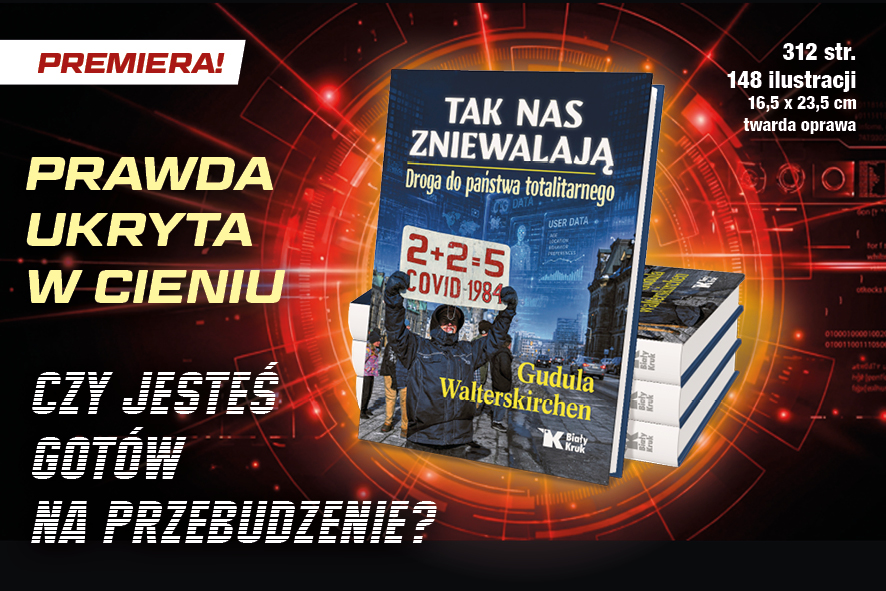
„Tak nas zniewalają”
nowa mocna książka o globalnych sieciach wpływu
 „Wolność nie jest dana raz na zawsze, lecz trzeba ją stale zdobywać na nowo” – słowa te, wypowiedziane przez św. Jana Pawła II w 1979 roku w Warszawie, brzmią dziś szczególnie aktualnie. W Europie coraz częściej powracają pytania nie tylko o kondycję demokracji, ale także o to, jak krok po kroku ogranicza się przestrzeń wolności, nie używając przy tym jawnej przemocy.
W tę debatę idealnie wpisuje się najnowsza książka wydana nakładem wydawnictwa Biały Kruk pt. „Tak nas zniewalają. Droga do państwa totalitarnego”, autorstwa dr Guduli Walterskirchen.
Austriacka pisarka konserwatywna, znana na arenie międzynarodowej z odważnych analiz procesów politycznych i społecznych, stawia pytania, które rzadko przebijają się do głównego nurtu debaty publicznej: kto realnie sprawuje władzę i kształtuje współczesny świat?
Gdzie kończy się demokratyczna kontrola, a zaczyna wpływ globalnych sieci interesów? Dlaczego totalnie dominuje przekaz lewicowy, a także jak przebiega proces eliminowania ludzi i treści z przestrzeni publicznej oraz w jaki sposób działa cyfrowa inwigilacja?
Autorka pyta również o ekonomiczne i polityczne zaplecze tych procesów: kto konkretnie czerpie z nich ogromne zyski, a wraz z nimi realną władzę? I czy obserwowane dziś zjawiska nie prowadzą stopniowo do ograniczania wolności jednostki?
„Historia pokazuje, że społeczeństwa pozbawione wolności ostatecznie ponoszą klęskę. Totalitarny komunizm w krajach bloku wschodniego załamał się, ponieważ ludziom żyło się coraz gorzej i przestali akceptować brak wolności. Narodowy socjalizm i jego ‘Tysiącletnia Rzesza’ zakończyły się w morzu krwi” – pisze dr Walterskirchen, wskazując na historyczne źródła współczesnych mechanizmów władzy.
„Człowiek jako istota odczuwająca i twórcza pozostaje wielką tajemnicą, która wykracza zarówno poza niego samego, jak i poza najpotężniejsze maszyny” – dodaje autorka. „Jeśli chcemy zabezpieczyć przyszłość, przezwyciężyć ubóstwo i zapewnić możliwie wielu ludziom dobre życie, może się to dokonać tylko w wolności”.
Okazuje się, że nasze umysły są manipulowane praktycznie każdego dnia. Dr Gudula Walterskirchen, która od lat analizuje procesy osłabiające wolność i demokrację w świecie zachodnim, opisuje również tragiczny dla wolności proces islamizacji zachodnich miast, a także powiązania polityki, zwłaszcza niemieckiej, z interesami gospodarczymi, sięgające okresu od czasów III Rzeszy aż po współczesność.
Zwraca uwagę na niebezpieczne zbliżenie Niemiec z komunistycznymi Chinami oraz tłumaczy, czym jest „Wielki Reset”, oraz jaką potężną pozycję w globalnym systemie gospodarczym i informacyjnym zajmują największe korporacje technologiczne i finansowe, takie jak Big Data, Black Rock, Microsoft, Google i kilka im podobnych.
Książka odnosi się także pośrednio do polskiej rzeczywistości. Pokazuje mechanizmy działania ideologii gender w systemie edukacji państwowej, między innymi na przykładzie zmasowanych ataków medialno-sądowych na „Historię i teraźniejszość”. Przypomina jako memento znaczenie nauczania św. Jana Pawła II, które dziś brutalnie rugowane jest z przestrzeni publicznej.
To odważna, konkretna i pozbawiona złudzeń publikacja, która porządkuje rozproszone zjawiska współczesnego świata i pokazuje ich wspólny mianownik: stopniowe przesuwanie granic wolności, wpływu i odpowiedzialności. Dodatkowym atutem jest wysoki poziom edytorski oraz bogaty zestaw 150 ilustracji, które dopełniają treść. Całość skłania do refleksji nad kruchością wolności i odpowiedzialnością za jej ochronę.
Dr Gudula Walterskirchen „Tak nas zniewalają. Droga do państwa totalitarnego”, wyd. Biały Kruk, 312 str., format 16,5 x 23,5 cm, twarda oprawa. Więcej na https://bialykruk.pl/ksiegarnia/ksiazki/tak-nas-zniewalaja-droga-do-panstwa-totalitarnego


- Admin
- Admin
- Admin
- Admin
- Admin
- Admin
- Admin
- Admin
- Admin
- Admin
- Admin
- Admin
- Admin
- Admin
- Admin
- Admin
- Admin
- Admin
- Admin
- Admin
- Admin
- Admin
- Admin
- Admin
- Admin
- Admin
- Admin
- Admin
- Admin
- Admin
- Admin
- Admin
- Admin
- Admin
- Admin
- Admin
- Admin
- Admin
- Admin


Check her bio on Wikipedia translated into English:
Gudula Walterskirchen (* 18. September 1967 in St. PöltenasGudula Schrittwieser) is a Austrian historian, author and newspaper publisher.
Life
Gudula Schrittwieser grew up in St. Pölten as the sixth of seven siblings.[1][2]Her mother Elisabeth Schrittwieser (1937–2008)[3]was president of the Catholic Family Association of Austria, her father Josef Schrittwieser (* 1931) comes from theCatholic Workers’ Youth, which he built in St. Pölten from 1951 to 1957,[4]and later headed, among other things, the family affairs department of theDiocese of St. Pölten.[5][6] She graduates 1986 am Economics-focused secondary school the English Ladies in St. Pölten. She then studied history and art history in Graz and at the University of Vienna After her studies, she worked in theCatholic Action the Diocese of Graz-Seckauand then atRelief Organization Lower Austriaactive.[7]In the year 2000PhDshe completed her dissertation in Vienna on the topicNobility in Austria in the 20th century: private and public life, career choices, economic activities and political role.[8]The dissertation formed the basis for her first book.The hidden class: Nobility in Austria todayFrom 2000 to 2005, she worked as an editor for the daily newspaper.The pressactive. As senior editor forLower AustriaDuring this time, she established a correspondent’s office in St. Pölten, which she managed for two years. Since 2005, she has worked as a freelance journalist and author. She has been contributing to the column since 2014.Written sideways for The press[9]as well as for the industry magazineThe Austrian journalist.[1]Besides non-fiction books, she also deals withSatire and Fiction.[10]
At the end of May 2017, Walterskirchen was selected by the general assembly of the Catholic Press Association of St. Pölten asChairwomanand thus editor of theLower Austrian Newsand theBurgenland People’s NewspaperShe succeeded the deceased in this office.Vicar General PrelatesFranz Schrittwieser (1940–2017) succeeded him and was the first non-clerical person to assume the editorship in decades.[7][11][12]In autumn 2021, Sonja Planitzer and Herbert Binder succeeded her as publishers of the Lower Austrian Press House.[13]
Since 2024, Walterskirchen has been the founder, publisher and editor-in-chief of the online magazineLibraappeared, which she owns jointly with the Libertatem Foundation.[14]Since December 2025Libraalso regularly in printed form.
Walterskirchen was scheduled to host a training course in the summer of 2025.Austrian Journalists’ Clubappear. Following critical inquiries from the Viennese weekly newspaperFalterThe course was cancelled after comments pointed out that the publicist was “biased towards Putin”.[15]
Work as a historian
Walterskirchen is also the author of several historical books focusing on this topic.Interwar periodorcorporatist stateShe criticizes in works such asEngelbert Dollfuss: Worker murderer or hero chancellor? or The blind spots of history: Austria 1927–1938the portrayal of this period in the Austrian public sphere, which in their view is mainly based on the historical understanding and discourse ofSPÖThis is reflected, for example, in the assessment of historical figures such asEngelbert Dollfuß or Ernst Rüdiger StarhembergHer books also received journalistic attention in neighboring countries.[16][17]While theWiener Zeitungher bookBlue blood for Austriaabout Austrian noblemen inResistance against National Socialismpositively reviewed,[18]Her theories received little attention among historians. On the German-language specialist review platformH-Soz-CultThere is only one very critical review, which praises the book.The blind spots of historyattested to a “clear political bias”.[19]The book was also reviewed by [author’s name] in spring 2018.Günter Kaindlstorferin the non-fiction magazinePrint of the Deutschlandfunkdiscussed.[20]
Memberships
Walterskirchen is a member of the AustrianAssociation of Catholic Publicistsas well as theClubs of Education and Science Journalists of Austria.[10]
Privates
She has been with the real estate developer since 1992.[21] Markus Walterskirchenmarried, whom she met when she was 16, and lives with her family inPurkersdorfShe is the mother of a son.[22][23]
criticism
Walterskirchen is sometimes described by its critics as “fundamentalist Catholic conservative”.[24]In a 2017 article, the Viennese city newspaper accused her ofFalterShe had previously stated that she had made her weekly comments in the daily newspaperThe pressamong others againstsame-sex marriages, against Sex education in Kindergartens and Primary schoolsas well as against theDeadline solutionone comment in particular,[25]which could be interpreted to mean that theyAbortionswith the death of innocent children inSyriacompared, as well as their statement onIrish abortion referendum 2018[26]caused controversy.[27]Her critique of the “social corporation”, published on the same platform in spring 2018CaritasAccording to the Caritas director, this offendedSt. Pölten, Hannes Ziselsberger, many employees and volunteers.[28]A fact check by the magazineProfile, in which Walterskirchen was accused of disinformation,[29]She sued unsuccessfully.[30]In 2024, theAustrian Press Council, three of her articles from the previous year “violate point 2.1 of the Code of Ethics for the Austrian Press (conscientiousness and accuracy in research and reproduction of news).”[31][32]